What Makes a Research Peptide a "Healing Peptide"?
The label "healing peptide" is shorthand for synthetic or naturally derived amino acid chains studied in preclinical models for their roles in tissue repair, cellular regeneration, and biological restoration. The size range is wide — from 4 to 43 residues — and the mechanisms differ substantially between compounds [PMID: 16719866]. What these compounds share is that published research examines them as signaling agents that interact with cellular receptors, extracellular matrix components, and intracellular cascades rather than as conventional small-molecule therapeutics [PMID: 15811640]. The research interest centers on growth factor modulation, angiogenesis, cellular proliferation, and integrin receptor interactions [PMID: 23689629]. BPC-157, TB-500, and Epitalon sit in this category but represent three distinct origins, three distinct mechanisms, and three distinct research niches. Clinical applications are investigational; these are laboratory research tools [PMID: 15694006].
BPC-157: Gastric Origin, Proline-Rich Structure, and Multi-Target Signaling
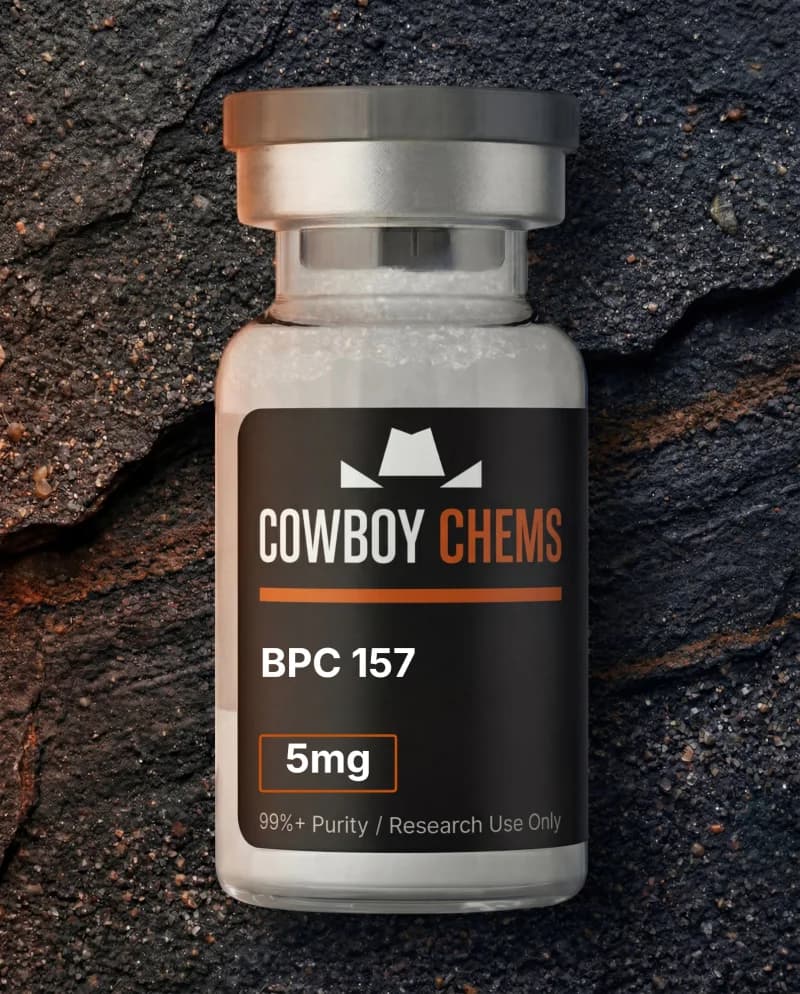
BPC-157 is a 15-amino acid synthetic pentadecapeptide derived from a protective protein sequence found in human gastric juice [PMID: 28438338]. The sequence — Gly-Glu-Pro-Pro-Pro-Gly-Lys-Pro-Ala-Asp-Asp-Ala-Gly-Leu-Val — is unusual in its density of proline residues: three consecutive prolines at positions 3-5, plus a fourth at position 8, creating structural rigidity that contributes to enzymatic resistance. Molecular weight approximately 1419 Daltons. The gastric origin is not incidental — acid stability in biological environments is one of BPC-157's characterized properties, which has drawn research interest from investigators studying gastric biology and mucosal protection [PMID: 201436619]. Published mechanisms under investigation include VEGF and FGF growth factor pathway interactions, nitric oxide production modulation, and prostaglandin metabolism effects [PMID: 23689629]. Tendon, ligament, and muscle tissue studies in animal models have been a primary research direction [PMID: 30854421]. At the cellular level, BPC-157 studies in fibroblast and epithelial cultures have examined collagen synthesis, growth factor expression, and angiogenic markers [PMID: 28438338]. All applications are preclinical.
TB-500: Thymus-Derived, Actin-Binding, and Cell Motility Research
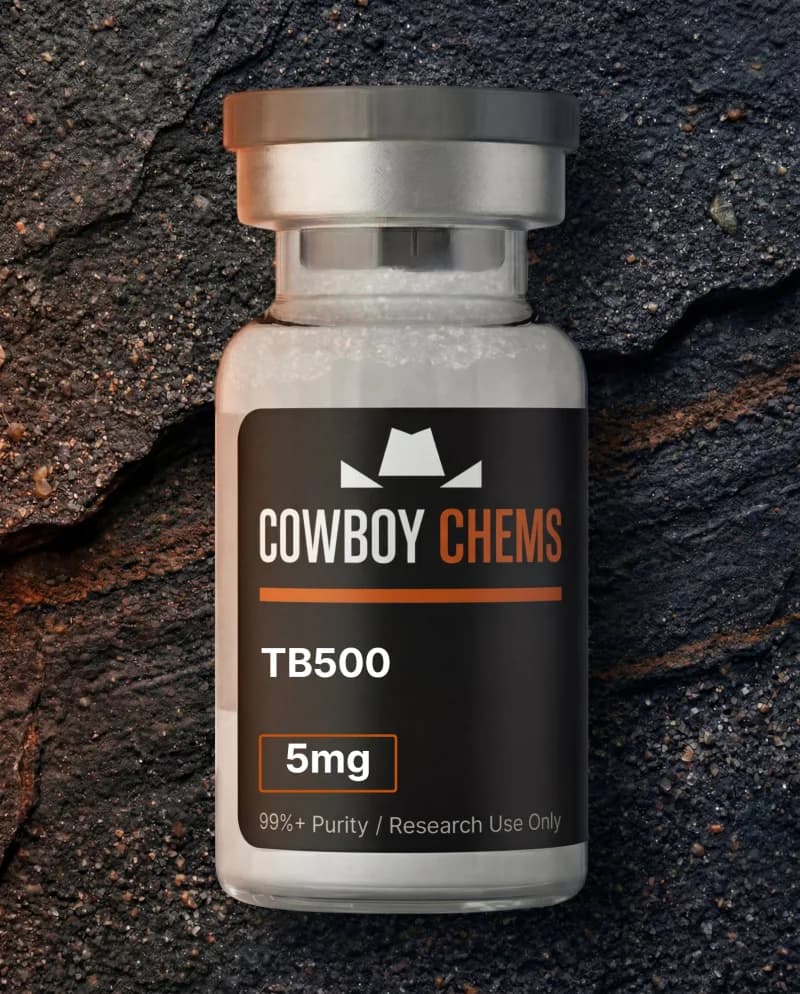
TB-500 is a synthetic version of Thymosin Beta-4, a 43-amino acid polypeptide originally isolated from bovine thymus tissue — though research today uses synthetic versions rather than tissue-derived material [PMID: 15694006]. The compound's functional identity is defined by its actin-binding properties: an acetylated N-terminus and multiple domains that facilitate interaction with actin monomers and cytoskeletal components [PMID: 16719866]. The active fragment used in many research applications contains the LKKTETQ actin-binding sequence rather than the full 43-residue chain; molecular weight for full-length TB-500 runs approximately 4964 Daltons [PMID: 27175704]. Research applications concentrate on cell migration, wound healing, and cytoskeletal biology. Published cell culture work has examined endothelial cell migration rates, fibroblast wound closure in scratch assays, and actin polymerization dynamics using fluorescent microscopy [PMID: 30854421]. Studies in dermal models focus on fibroblast activity, vascularization patterns, and extracellular matrix deposition [PMID: 15811640]. The physiological stability of TB-500 under tissue culture conditions makes it tractable for extended in vitro investigation. All applications are preclinical.
Epitalon: Four Residues, Pineal Origin, and Telomere Biology Research
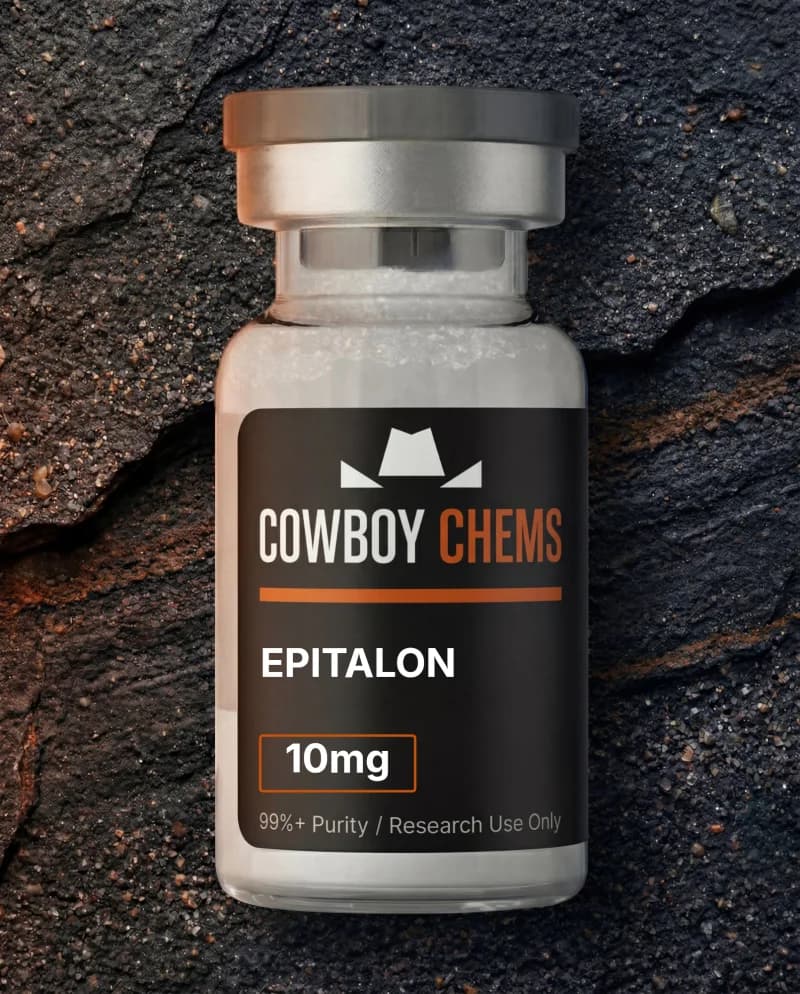
Epitalon is the simplest compound in this group: four amino acids, sequence Ala-Glu-Asp-Gly, derived from research into pineal gland extracts and the natural peptide epithalamin [PMID: 15694006]. Molecular weight approximately 390 Daltons. The tetrapeptide structure represents the minimal functional sequence isolated from the larger epithalamin protein through structure-activity work [PMID: 16719866]. Published proposed mechanisms focus on telomerase activity and cellular aging pathways: research in fibroblast cultures has examined telomerase activity assays, oxidative stress markers, and cellular lifespan parameters [PMID: 15811640]. Studies in animal models have explored effects on cellular aging markers, metabolic parameters, and DNA synthesis mechanisms [PMID: 23689629]. The small size facilitates cellular uptake and simplifies laboratory handling compared to larger peptides. The pineal origin positions Epitalon within research programs investigating neuroendocrine regulation and cellular aging mechanisms — a different research niche from the tissue repair focus of BPC-157 and TB-500.
Structural Origins and What They Mean for Research
Each compound's tissue origin correlates with distinct physical properties relevant to experimental design [PMID: 28438338]. BPC-157's gastric juice origin correlates with acid stability — it does not rapidly degrade in acidic environments, which matters for in vitro models using acidic conditions and for gastric biology research [PMID: 27175704]. TB-500's thymic origin reflects its role in immune cell biology and its actin-binding properties — the cytoskeletal interactions that drive its research applications are an expression of its native biological context [PMID: 30854421]. Epitalon's pineal origin ties it to neuroendocrine and aging research, with the telomere biology focus emerging from the epithalamin research lineage [PMID: 201436619]. Understanding origin is not trivia — it informs which biological systems a compound is most likely to engage and which model systems published literature has validated for studying it [PMID: 15694006].
The structural distinctions drive practical differences in how these compounds behave in laboratory settings [PMID: 23689629]. BPC-157's proline density provides rigidity and enzymatic resistance; TB-500's actin-binding domains define its primary research interactions; Epitalon's all-polar, four-residue composition enables efficient cellular uptake. These characteristics shape concentration ranges, incubation protocols, and the cell models best suited for each compound [PMID: 28438338].
Proposed Mechanisms Under Investigation
Multiple mechanisms have been proposed across the published literature, and the honest characterization is that they remain under active investigation requiring replication across independent laboratories before any are considered settled [PMID: 15811640]. For BPC-157: VEGF and FGF growth factor pathway modulation, NO production effects, and prostaglandin metabolism interactions are the primary mechanistic proposals [PMID: 23689629]. For TB-500: actin binding with downstream effects on cell migration, extracellular matrix remodeling, and angiogenesis through cytoskeletal organization pathways [PMID: 27175704]. For Epitalon: telomerase activation and antioxidant enzyme upregulation, with particular focus on cellular senescence markers and hTERT expression [PMID: 201436619]. Each of these research directions has produced published findings, but the literature frames them as hypotheses supported by preclinical data — not as established mechanisms equivalent to those documented for long-studied pharmacological agents.
Research Applications: Three Different Lanes
The compounds occupy distinct research niches that do not substantially overlap [PMID: 27175704]. BPC-157 research is centered on connective tissue biology — tendon, ligament, and muscle investigations in animal models, with cell culture work examining collagen synthesis and growth factor interactions [PMID: 30854421]. TB-500 research is centered on cellular migration and wound healing — fibroblast and endothelial cell behavior in dermal models, with cytoskeleton work examining actin dynamics [PMID: 15694006]. Epitalon research is centered on cellular aging — telomere length, telomerase activity, and oxidative stress parameters in fibroblast cultures and aging animal models [PMID: 15811640]. Selecting among these compounds requires considering which cellular systems and molecular endpoints are relevant to the research question, not just which compound has more literature overall.
Frequently Asked Questions
What distinguishes BPC-157 from other tissue repair peptides?
BPC-157's proline-rich sequence and gastric juice origin combine to give it acid stability and a distinct set of growth factor interactions not characteristic of other peptides in the tissue repair research category. Its 15-residue structure with triple-proline at positions 3-5 confers enzymatic resistance that extends experimental tractability in biological media.
How does TB-500's size compare to other research peptides?
TB-500 at 43 amino acids and approximately 4964 Daltons is significantly larger than both BPC-157 (15 residues, ~1419 Da) and Epitalon (4 residues, ~390 Da). Research applications often use the active LKKTETQ-containing fragment rather than the full-length sequence, depending on the experimental design.
Why is Epitalon only four amino acids?
The Ala-Glu-Asp-Gly tetrapeptide was identified through structure-activity work on the larger epithalamin protein as the minimal sequence retaining the biological activity of interest in cell culture and animal model research. The small size simplifies handling, improves cellular uptake, and reduces synthesis complexity compared to longer peptides.
What are the most common research applications for each peptide?
How do researchers verify peptide identity and purity?
Mass spectrometry confirms molecular weight to within ±0.5 Da of theoretical values, establishing identity. HPLC quantifies purity by separating target peptide from impurities and calculating the target peak fraction. Both methods should be confirmed through batch-specific CoA documentation before experimental use.
What analytical approaches are used in cell culture studies?
Cell-based studies typically use fluorescence microscopy for localization and migration studies, flow cytometry for proliferation and apoptosis markers, ELISA for protein quantification, qPCR for gene expression, and biochemical assays (TRAP, ELISA, Western blot) appropriate to the specific mechanism under investigation.
This content is for research and educational purposes only. The information reflects published scientific literature and laboratory research findings. These are investigational compounds not approved for human consumption, medical treatment, or therapeutic use. All research must comply with applicable institutional protocols, safety guidelines, and regulatory requirements. PMIDs listed require independent verification through PubMed or equivalent databases.
Cowboy Chems supplies these compounds for laboratory research purposes only. Not for human or animal use.
Stay in the loop
New compounds, research updates & exclusive subscriber deals.